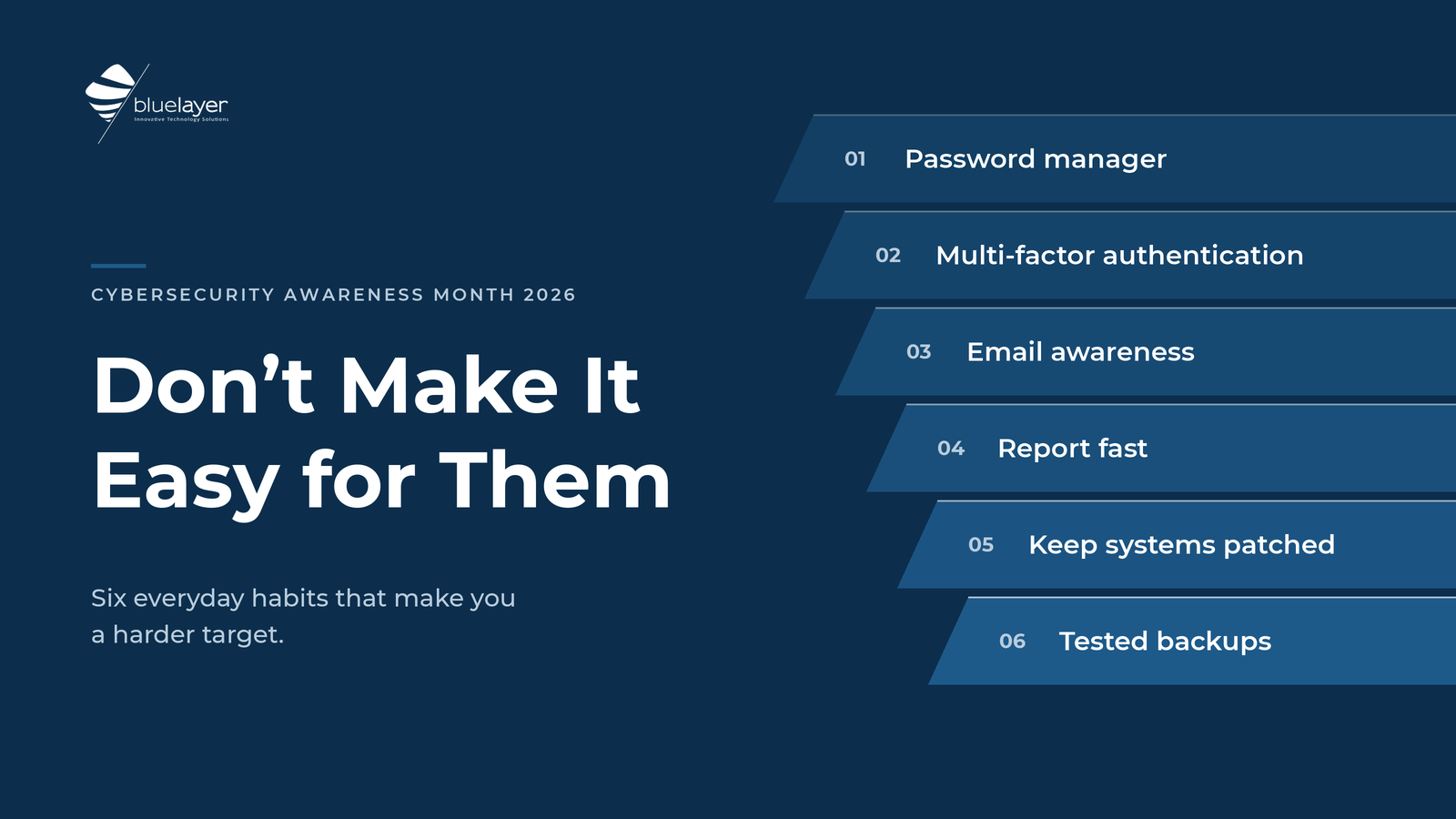
Cybersecurity Awareness Month is an important reminder to stay aware of online dangers, but it is also about building habits that consistently protect you from cybercriminals. This year’s message, “Don’t Make it Easy for Them,” focuses on taking proactive steps and making it harder for cybercriminals to affect your life.
AI is increasing the speed and quality of cybersecurity attacks; therefore, these attacks are becoming more convincing and detailed because AI can find and exploit details about us and our systems faster than ever. This means that many employees will face an ever-growing number of attacks that look detailed and believable.
However, as AI enhances and scales cyberattacks, focusing on the fundamentals of cybersecurity is more important than ever to protect yourself, your employees, and your business.
What Can You Do?
To make it harder for cybercriminals to attack you, make sure you are covering the basics.
Use a Password Manager
Use a password manager and strong passwords that contain no self-identifying information. A password manager can help you create and securely store unique passwords, so you don't have to rely on passwords that are easy to remember or reuse the same password across multiple platforms.
If one password is compromised, using unique credentials can also help prevent that single breach from giving an attacker access to multiple accounts.
Use Multi-Factor Authentication
Use Multi-Factor Authentication when you log in. Yes, we know it’s annoying, but it also protects you from random, unidentified logins.
MFA requires additional verification before someone can access your account. Even if your password is compromised, that extra step can make it much harder for someone else to log in with your credentials.
Pay Attention to Your Emails
When you receive an email, pay attention to unexpected requests, unusual links, a sudden sense of urgency, changes in normal communication, or requests for sensitive information.
With AI making phishing emails more polished and convincing, spelling mistakes and bad grammar are no longer the obvious warning signs they once were. If something seems unusual, verify the request through a trusted method of communication before clicking a link, opening an attachment, sending money, or sharing information.
Always Communicate
If you believe you received a phishing email or fall for a scam, report it to IT immediately. Communication makes a huge difference in our ability to mitigate the compromise.
Mistakes happen, and waiting to see what happens next only gives a potential attacker more time. The sooner your IT team knows what happened, the sooner they can investigate and take steps to limit the impact.
Keep Your Systems Patched
Software updates aren't just about adding new features. Many updates include security patches that address vulnerabilities discovered in operating systems, applications, and other technology.
Keeping devices and software current helps close those gaps before attackers can exploit them. When an update is available, don't make “remind me later” your permanent strategy.
Know Your Backup Status
Backing up your data is an important part of protecting your business, but a backup alone isn't enough. Backups should be current, monitored, and tested to ensure you can actually recover your information when you need it.
Whether you're dealing with ransomware, hardware failure, accidental deletion, or another unexpected event, a reliable backup can make the difference between an inconvenience and a much larger business disruption.
Cybercriminals are always looking for the easiest way in. As their tools become more sophisticated, the small cybersecurity habits you practice every day can make a big difference.
You don't have to make yourself impossible to attack. Just don't make it easy for them.